- This will be helpful for those – planning a 3-day trip centering around Tokyo and nearby tourist destinations.
- Japan Travel Pass – Advantages of the JR Tokyo Wide Pass (beyond just price merits).
- Destinations centered around Tokyo – Go beyond Tokyo and Yokohama to see Mount Fuji and enjoy hot springs.
1. This will be helpful for those who…
The Era of 40 Million Inbound Tourists: Keeping Travel Expenses Reasonable
Having finally emerged from the long tunnel of the pandemic, Japan is currently experiencing an unprecedented inbound boom, with over 40 million foreign tourists flocking to the country annually. Especially with the continuing advantage of favorable exchange rates, the mobility demand among travelers wanting to freely navigate the numerous tourist attractions around Tokyo has skyrocketed. If you plan to visit multiple landmarks, the practicality of a “travel pass”—which allows you to catch both cost-effectiveness and convenience without the hassle of buying tickets every time amidst the endless crowds—is being maximized now more than ever.
Nevertheless, transportation costs in Japan are quite expensive. The basic base fare itself is high. Just traveling a few stops can quickly rack up transportation expenses. Furthermore, there is no transfer discount system like in Korea. Therefore, for travelers who want to explore the touring cities and their suburbs more carefully rather than just going for simple shopping, a travel pass is not an option but a sheer necessity. You can freely adjust your itinerary and enjoy the destinations without worrying about fares.
Say No to cliché Tokyo trips! For travelers wanting to expand their routes
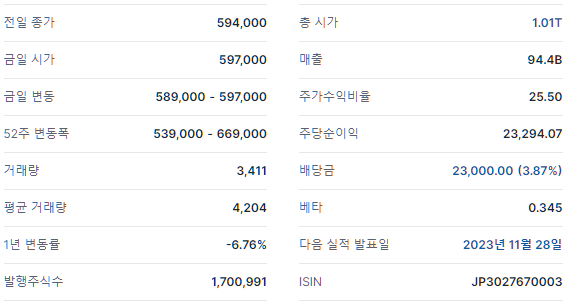
Tokyo Metropolis, along with Kanagawa, Saitama, and Chiba prefectures that make up the Greater Tokyo Area, form the largest metropolitan area in the world. The population exceeds 40 million, with a GDP of over 2 trillion dollars. In terms of area, it corresponds to about one-third of South Korea. Though some compare it to the Seoul metropolitan area, the scale of Japan’s metropolitan region far exceeds it. To travel around Japan’s large metropolitan areas, including Tokyo, within a limited time, utilizing the Shinkansen (bullet train) is necessary. The issue here is the cost. As explained earlier, regular train fares in Japan are quite steep, and the Shinkansen is undoubtedly much more so. For those wanting to expand their travel routes beyond the metropolitan area to experience the feel of a quiet countryside and Mount Fuji, the JR Tokyo Wide Pass is highly recommended to discover a new facet of the Greater Tokyo Area.
2. Japan Travel Pass – Advantages of the Tokyo Wide Pass
Which routes are available?
Fundamentally, you can use the JR lines within the metropolitan area. Since Japan is a country with highly developed railways, trains are an excellent choice as a means of transportation. The routes available with the JR Tokyo Wide Pass are shown in the image below. It covers not only Tokyo but also extends down to Yokohama, Atami, and Ito; to the right towards Chiba and Narita Airport; and upwards to Nikko, Kinugawa Onsen, Kuroiso, GALA Yuzawa, and Karuizawa. The Shinkansen routes marked in green are particularly impressive. Personally, just taking the eastbound route to eat gyoza in Utsunomiya and returning is enough to let you deeply feel the atmosphere of the Kanto region.
What are the price merits?
It costs 10,180 yen for adults (12 years and older) and 5,090 yen for children (ages 6-11). Factoring in exchange rates, you are essentially purchasing a pass that allows unlimited rides for 3 days for well under 100,000 KRW (approx. $75). On the official Japanese website, they emphasize the pass’s merits through comparisons like the following: If you travel the route Tokyo Station (Departure) – GALA Yuzawa – Omiya – Nikko – Shinjuku Station (Arrival), the regular fare is around 20,000 yen, but with the Tokyo Wide Pass, you can do it for half the price. Earning unlimited access to the Shinkansen is another significant advantage. Since it is valid for 3 consecutive days, naturally, you can secure accommodation in between. Nikko is famous for its hot springs, so staying overnight to enjoy the hot springs is an obvious choice. The ability to ride the Narita Express directly to Narita Airport can also be considered a great benefit.
Unlimited use for 3 days
As mentioned above, the JR Tokyo Wide Pass offers unlimited use for 3 days (note: it must be used on 3 consecutive days). Considering this, it is undeniably an attractive pass for travelers who prefer expansive itineraries that cover Tokyo and its neighboring cities (such as Yokohama and Kamakura) alongside nature spots like Mount Fuji. By staying overnight at a favored tourist destination (such as a hot spring resort) to relieve fatigue before continuing your journey the next day, the satisfaction of the trip will surely skyrocket.
3. Destinations centered around Tokyo
On the official JR Tokyo Wide Pass website, nearby tourist destinations centered around Tokyo are summarized and well-introduced. While there are indeed many places to visit in every corner of Tokyo, the Kanto region of Japan has its own unique charm. Just visiting the places listed on the map below will significantly deepen your understanding of the Kanto region. Naturally, centering around Tokyo, you can enjoy the ocean to the south, Mount Fuji to the southwest, and inland ski resorts and quiet hot spring baths in mountain villages to the north. Essentially, you get the opportunity to witness and enjoy the scenery within the world’s largest metropolitan center while also experiencing nearby mountains, seas, hot springs, and Japan’s representative Mount Fuji up close.
In Korea, a 2-hour KTX train ride from Seoul lets you enjoy the beautiful mountains of Gangwon-do and the East Sea. However, as previously mentioned, the scale of Japan’s Greater Tokyo Area is entirely different. If compared in terms of large cities, it’s as if Busan were located somewhere along the route between Seoul and Gangneung. This is because Yokohama serves as Japan’s second-largest city. Places north of Tokyo, where the Shinkansen is available, such as Omiya and Utsunomiya, are also very much worth visiting. Ah, there’s also Kamakura in the direction of Yokohama. While it cannot be compared to Kyoto or Gyeongju in scale, it is a city with a surprisingly great classical atmosphere similar to Gyeongju.
4. Conclusion – The JR Tokyo Wide Pass is the answer for traveling Kanto around Tokyo!
Some people casually say that Tokyo isn’t much different from Seoul, but Tokyo is undoubtedly a city with a unique charm. This applies to any travel destination, but it’s especially true when you take the time to casually explore every nook and cranny. Personally, I highly recommend going beyond Tokyo limits and fully enjoying Japan’s metropolitan region. The Kanto region, which constitutes the Greater Tokyo Area, is a fascinating place. To navigate this expansive area—equivalent to one-third the size of South Korea—the JR Tokyo Wide Pass is an absolute necessity. I believe it is a highly cost-effective travel pass that allows you to enjoy the broader Kanto region with just about 2 hours of travel time radiating from Tokyo.
For detailed instructions on where to purchase it and how to use it, please refer to the explanations on the official site linked below. While buying it on booking platforms like Klook before departure might seem more comfortable, isn’t it worth taking the challenge of buying it locally in Japan? Even if you make a mistake, it will become a memorable and fun experience. After all, travel always requires a little bit of adventurous spirit.
JR Tokyo Wide Pass | Fares & Passes | JR-EAST (jreast.co.jp)