※ This article is for informational purposes only and is not investment, legal, tax, or immigration advice. Figures, rules, hours, and operational details were accurate when published—verify with official sources before you rely on them.
What is the first thing that comes to your mind when you think of Ginza? Is it crowds carrying luxury shopping bags, endless rows of high-end department stores, or the mind-bogglingly high land prices?
However, Ginza on weekends operates at a completely different rhythm compared to the hustle and bustle of weekdays. A wide asphalt road emptied of cars, an art bookstore that sparks deep inspiration, and a lush green rooftop garden nestled above the forest of skyscrapers—this is the true face of Ginza on weekends.
Today, I personally took a stroll and discovered the deep, relaxing, and artistic corners hidden behind the glamour. Let me introduce them to you.
1. Tsutaya Books GINZA SIX: A Lifestyle Proposed by Art
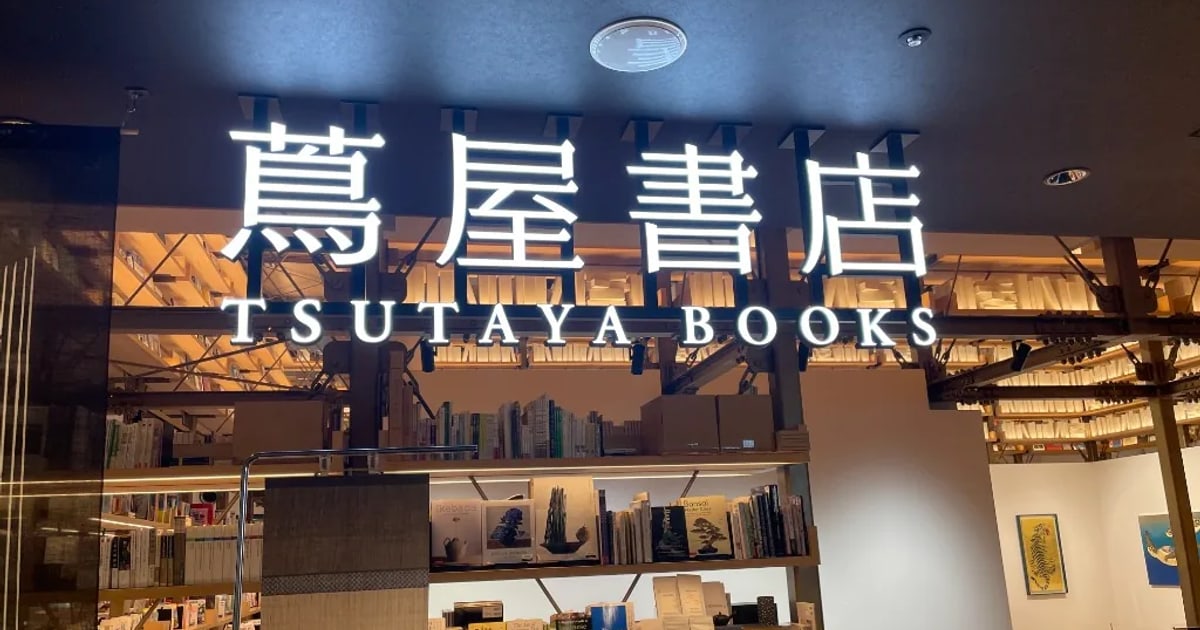
My first stop was the 6th floor of GINZA SIX, a landmark mixed-use commercial complex in the heart of Ginza. The Tsutaya Books located here boasts one of the most intense personalities among bookstores worldwide.
This is not just a retail bookstore. It showcases a highly specialized curation — selecting and presenting books and artworks with a specific theme — focusing on traditional Japanese culture, architecture, photography, design, and contemporary art.
The massive 6-meter-high bookshelves and the inner courtyard design that softly filters in natural light make it feel like you have entered a contemporary art museum rather than a bookstore. In the architecture section, I spent quite some time looking through limited-edition photography collections and rare books of legendary masters. Just turning the pages of these hard-to-find books instantly recharges my design senses. If you want to experience Japan’s unique aesthetics and global art trends in the most sensory way, this bookstore is a highly recommended culture spot along the Ginza stroll.
2. GINZA SIX Garden: A Green Rooftop Penthouse in the Middle of Tokyo
After filling my visual inspiration at the bookstore, it was time to take the escalator up to the building’s highest rooftop floor on the 13th level.
In my view, there is absolutely no need to spend a lot of money to go up to high-priced paid observatories like Shibuya Sky or Tokyo City View in Roppongi Hills just to see the city skyline. GINZA SIX’s rooftop garden, ‘GINZA SIX Garden,’ is the ultimate free alternative where you can peacefully enjoy Tokyo’s panorama.
Situated at a height of 56 meters, this rooftop garden is surrounded by transparent glass panels. This design allows you to enjoy a seamless 360-degree view of the Tokyo skyline without any obstructions. Spanning a vast 4,000 square meters (about 1,200 tsubo), the rooftop is lushly landscaped with lawns and various species of trees, making it feel like a forest in the sky.1 Coming across lush green grass and a pond with flowing water right in the middle of Tokyo is incredibly healing in itself.
Sitting quietly on a bench under the shade of a tree, I looked towards the west. Tokyo Tower, glowing in its iconic crimson light, came into view. When I turned my head to the east, Tokyo Skytree was shining in silver. While it may not be a soaring skyscraper, the unrivaled geographical location of Ginza allows you to compare Tokyo’s southern and northern landmarks in a single glance. It gave me a deep sense of quiet satisfaction.
3. Pedestrian Paradise: Standing on 56 Years of History and Walking the Empty Avenues
Stepping out of GINZA SIX and onto Chuo-dori Street, I encountered the highlight of the weekend Ginza stroll—the ‘Pedestrian Paradise’ (Hokosha Tengoku).
Pedestrian Paradise — a system that completely blocks vehicle traffic on Saturdays, Sundays, and public holidays (midday hours only) to open streets exclusively for pedestrians — was first introduced in Ginza on August 2, 1970. This year, in 2026, marks the proud 56th anniversary of this living tradition of Ginza.4
Chuo-dori, which is normally filled with luxury sedans and honking horns, is completely occupied by the footsteps of people during Saturdays, Sundays, and public holidays (midday hours only).
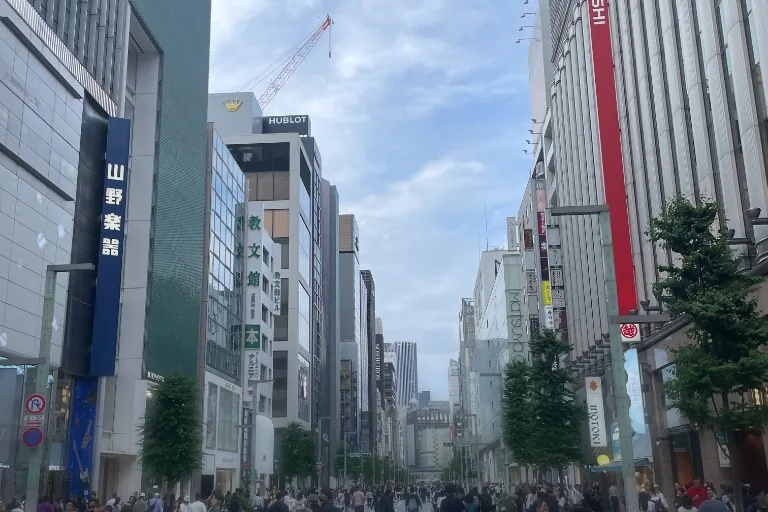 Ginza Chuo-dori during the weekend Pedestrian Paradise hours, where vehicle traffic is completely blocked. On the left side of the street stands the historic Yamano Music. (Foreground faces have been softly blurred to protect privacy.)
Standing in the middle of this wide avenue and looking up at the surrounding skyscrapers is a remarkably unique experience. The crowd flowing across the open asphalt and the skyline on both sides alone convey the relaxed weekend rhythm of Ginza.
On the left side of the street, Yamano Music Ginza Flagship Store (山野楽器 銀座本店), holds the legendary status of having the most expensive land in Japan for 20 consecutive years according to the 2026 Land Price Appraisal. Walking freely on this world-class asphalt, valued at approximately 67.1 million yen per square meter,5 without paying a single cent and snapping commemorative photos is perhaps the most delightful gift that weekend Ginza offers.
Right next to Yamano Music stands the Kyobunkan (教文館) building, a historic bookstore founded in 1885 and opened in Ginza in 1891, which has weathered all the storms of the district. On the right, the traditional Ginza Mitsukoshi (MITSUKOSHI) department store stands firm, visually showcasing the unique historical layers where Ginza’s past and present coexist.
Ginza Weekend Walking Practical Guide
| Location / Activity | Detailed Location & Operating Info | Recommended Time | Cost Per Person |
|---|---|---|---|
| Tsutaya Books (GINZA SIX 6F) | Curation focusing on art, design, and architecture with attached gallery spaces. | 1 hour - 1.5 hours | Free (Books/goods separate) |
| GINZA SIX Garden | 13F rooftop garden, 360-degree glass observatory (Views of Tokyo Tower & Skytree). - 7:00 – 23:00 (Subject to temporary closure/restricted access due to severe weather, ginza6.tokyo/hours) | 30 mins - 1 hour | Free |
| Pedestrian Paradise (Chuo-dori) | Ginza 1-chome to 8-chome intersection (Approx. 1.1km) - April to September: 12:00 - 18:00 (12 PM - 6 PM) - October to March: 12:00 - 17:00 (12 PM - 5 PM) | Free walking | Free |
Conclusion: “Finding the Ultimate Serenity on the Most Classic Street”
When you peel back the cold, glittering outer shell of Ginza as a high-end luxury shopping district, you find a peaceful daily rhythm and world-class art intricately woven together inside.
If you want to move beyond mere consumption and recharge your life with artistic inspiration, why not walk along the wide streets of Ginza this weekend?
I highly recommend reading the Ginza–Marunouchi DNA Walking Guide as well, to trace the historical tracks of assets as you stroll through the glamour of the city. The iconic silhouette of Tokyo Tower peering through the green leaves of the sky garden and your light steps walking freely on the wide avenue will make your weekend in Tokyo truly special.
Walking Action: Weekend Ginza Essential Checklist
- Take a look through a contemporary art or design photography book at Tsutaya Books on the 6th floor of GINZA SIX.
- Sit on a lawn bench in GINZA SIX Garden and spot and compare Tokyo Tower and Tokyo Skytree.
- Stand in the middle of the wide avenue during Pedestrian Paradise and capture the weekend air of Ginza with your camera.