![Tokyo's 6 Key Wards: Real Estate Data & Investment Insights [2026]](https://gsfark.com/assets/images/blog/tokyo-6-wards-real-estate-insight-hero-og.jpg)
※ This article is for informational purposes and personal analysis only—not investment, legal, tax, or immigration advice, and not a recommendation to buy or sell any property or financial product. Verify figures, rules, and market data against official sources and consult qualified professionals; you are solely responsible for your decisions. Information reflects the time of writing and may change afterward.
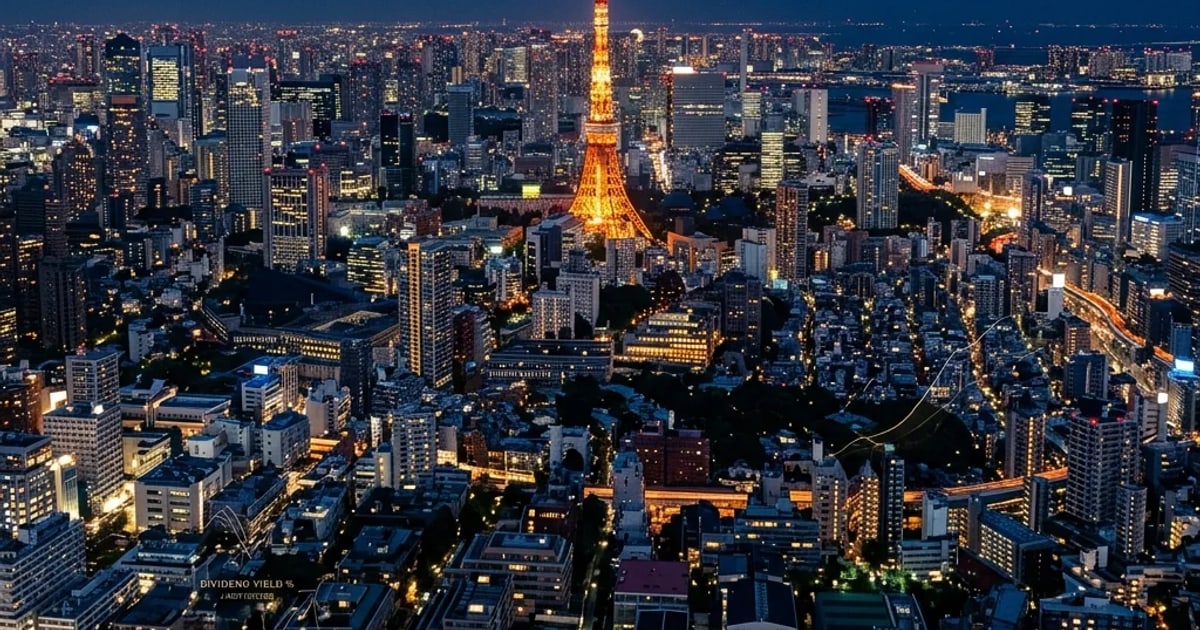
A massive wave of capital is being sucked into the center of Tokyo like a black hole. As global geopolitical tensions align with an unfathomably prolonged weak yen, real estate in central Tokyo has evolved far beyond mere ‘living space’ to become Asia’s ultimate ‘Safe Haven’.
Specifically, the “Core 6 Wards” (Chiyoda, Chuo, Minato, Shinjuku, Shibuya, and Bunkyo)—often called the heart of Tokyo—are forming the most anomalous and extreme market in all of Japan. Today, I want to set aside simple optimism and cross-reference cold institutional numbers with my own firsthand groundwork to expose the raw reality that anyone preparing to invest in Tokyo’s core must face.
1. Breaking the Ceiling: The Prelude to Polarization
Throughout the past two years (2023–2024), the defining keywords piercing through Tokyo’s core mansion (condominium) market have undeniably been ‘extreme supply shortage’ and ‘all-time highs’.
The data is chillingly clear. According to Tokyo Kantei, the average asking price for a standard 70㎡ secondhand condominium in the Core 6 Wards surpassed 140 million JPY1 throughout much of 2025, climbing toward 160–170 million JPY by late 2025 and reportedly reaching 187–195 million JPY in early 2026 before a mild Q1 correction. Year-on-year, the 23 wards recorded +34.6% in 20251, while the central 6 wards alone posted +38.6% in April 20251 versus the prior year. (Tokyo Kantei, 2025 · archived copy) This trajectory left the limits of ordinary labor income far behind in the dust.
In fact, having recently moved to Nihonbashi (Chuo Ward), I feel this rapidly rising real estate inflation firsthand every single day. I was genuinely shocked to see a flyer at a local brokerage showing that even an older, non-newly built apartment near my home was selling for well over 300 million JPY. And I am not talking about a massive luxury complex, but a rather ordinary standalone multi-family building.
This abnormal asset inflation isn’t driven solely by wealthy Japanese nationals. Greater China capital fleeing domestic uncertainty, alongside Western UHNW (Ultra-High Net Worth) funds attracted by Japan’s cheap prices and high-quality infrastructure in the post-pandemic era, have aggressively swept up these prime core plots.
In this process, the market has torn itself completely in half. While Tokyo’s outskirts and commuter towns face stagnating prices or downward pressure due to flat wage growth, the Core 6 Wards have completely seceded to form their own ‘elite league’.
2. The Investment Paradox: The Truth Behind 2-3% Rental Yields
Here is where the investment paradox arises. Because asset prices skyrocketed so quickly, the Cap Rate (Capitalization Rate) — the most critical metric for investment purchases — has absolutely plummeted.
Currently, prime rental yields in the core areas are barely hovering in the 2% to low 3% range.2 Once you account for property taxes, repair reserve funds, maintenance fees, and depreciation, the actual operating ‘Cash Flow’ converges to zero or even dips into the negative.
So, if the textbook value of real estate—“rental income”—doesn’t support these prices, why are cold-blooded institutional investors and fund managers still swallowing these low cap rates and buying up whole buildings in the Tokyo Core 6?
First, Betting Purely on Capital Gains
This is not a scale of subsistence investing meant to secure a few bucks in monthly rent. All focus is aimed at a powerful conviction that the asset’s intrinsic value will jump by millions of dollars in a year or two—a sheer bet on Equity Value Appreciation.
Second, The Leverage Illusion Inherited from the Negative Interest Rate Era
If you can establish a local Japanese corporation or leverage strong credit to secure yen-denominated loans at ultra-low interest rates of less than 1%, even this meager 2-3% rental yield can be statistically washed into double-digit Return on Equity (ROE) via a positive spread. It is this “Cheap Money” that has forced the market upward, blinding investors to plummeting yields.
3. The Coming Hour of Reckoning: The BOJ Rate Normalization Detonator
However, no party lasts forever. In 2024, the Bank of Japan (BOJ) officially lifted its negative interest rate policy, pulling the trigger on a rate hike cycle.3 In the real estate market, a ‘rise in the cost of capital’ is the most lethal poison. What happens when the discount rate expands, and interest expenses begin choking investors who heavily leveraged themselves on floating rates?
Yet, the conclusion I draw from my own empirical insights is this: “Despite all of that, the fortress of the Core 6 Wards will be the last to fall, and it will hold the strongest.”
It all comes down to the ‘Locational Moat’. When interest rates rise, the first to take the hit are the over-leveraged outskirts and unprofitable mid-tier buildings. Conversely, the top-tier capital currently vacuuming up Tokyo’s Core 6 is not weak enough to be shaken by a few percentage points of interest; many are buying these ‘Trophy Assets’ with abundant All-Cash offers.
When marginal enterprises and suburban properties are dumped onto the market due to rising rates, core locations—which suffer from an absolute lack of land to build new supply—will see extremely limited damage.
4. Final Insight: An Investment Strategy for the Future
In conclusion, attempting to approach future investments in the Tokyo Core 6 Wards with the old concept of ‘buying cheap to secure a monthly Passive Income pipeline’ is a flawed strategy.
The profit-generation formula in this market has completely changed. A position here is now akin to burying a Gold Bar in a Swiss bank vault.
-
Discard the Illusion of Cash Flow Investing It is now mathematically nearly impossible for a new entrant without leverage to expect a decent return from rental income in the core wards. From the start, you must clearly reset your objective to ‘Global Risk Hedging’ and ‘Safe Asset Parking’.
-
Obsess Over Scarcity (Flight to Quality) In an era of rising interest rates, a ruthless sorting of the wheat from the chaff begins. A high-quality, pre-owned asset in the Core sector is infinitely safer than an ambiguous new build in the suburbs. Even if it is expensive, you often emphasize on high-end locations where foot traffic is heavily defended and the wealthy desperately desire to reside.
In truth, Tokyo’s core wards showed a brief moment of consolidation in late 2024 after the explosive surge—followed by another sharp leg upward in 2025. By Q1 2026, data from Tokyo Kantei and the Real Estate Economic Institute pointed to the first mild price correction in multiple months, as rising interest costs began weighing on leveraged buyers at the margin.4 Both the fear of a total crash and the blind faith of endless growth are dangerous. Only those who acknowledge the paradigm shift—that the market’s rule has evolved from “Cash Flow” to “Long-term Holding of Scarcity Value”—will be able to steadily grow their wealth in the highly volatile future of the Tokyo market.
Data freshness (April 2026): BOJ policy rate 0.75 %, 10-year JGB ≈ 2.43 %, TSE REIT Index ≈ 1,916, Tokyo 5-ward vacancy 2.22 % (Miki Shoji Q1 2026), Q1 2026 inbound tourists 10.68 M (JNTO). Verify the latest from linked sources before acting.
Investor Action: Session Summary & Check
- Gap: Analyze the tsubo-price gap trend between the Core 3 wards (Chiyoda, Minato, Chuo) and the secondary 3 (Shinjuku, Shibuya, Bunkyo).
- Redevelopment: Verify future supply schedules in areas where major private redevelopment drives land prices, like Shibuya or Toranomon.
- Preference: Check market liquidity in Bunkyo or Setagaya wards where end-user demand is strong.

![Tokyo's 23 Wards Compared — Property Prices & Living Environments [2026]](https://gsfark.com/assets/images/blog/tokyo-ward-guide-series-prologue-hero-og.jpg)