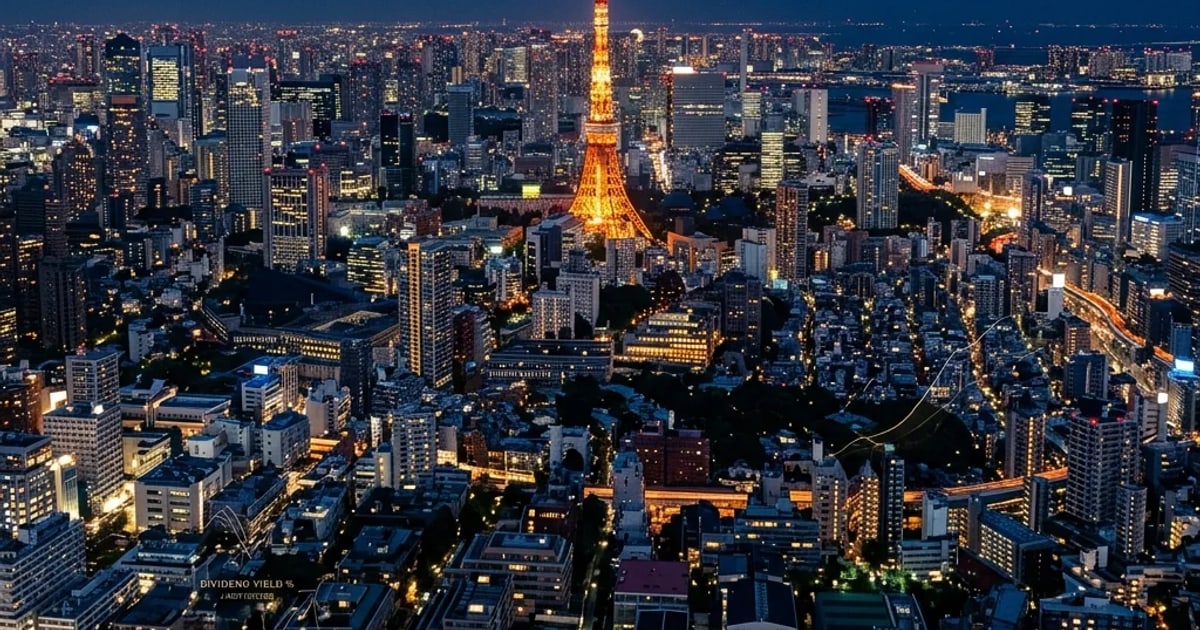
![Tokyo's 23 Wards Compared — Property Prices & Living Environments [2026]](https://gsfark.com/assets/images/blog/tokyo-ward-guide-series-prologue-hero-og.jpg)
※ This article is for informational purposes and personal analysis only—not investment, legal, tax, or immigration advice, and not a recommendation to buy or sell any property or financial product. Verify figures, rules, and market data against official sources and consult qualified professionals; you are solely responsible for your decisions. Information reflects the time of writing and may change afterward.
Although they all share the name “Tokyo,” the 23 special wards differ dramatically in their living environments, property prices, and daily neighborhood vibes.
On our living room wall in Nihonbashi, we have a large map showing all 23 wards and the western Tama cities.
Living right in the center of Tokyo, I felt it was essential to understand the city as a single cohesive flow, rather than looking at isolated districts.
This guide grew out of that habit: understanding Tokyo through data rather than vague impressions.
This series was built to answer the questions I had when I first started exploring: not as a tourist, but from the perspective of someone looking to relocate or invest. Purchase prices, rental rates, income levels, livability for foreign residents, and each neighborhood’s local identity — everything you need to make a decision, consolidated into one place per episode.
Who Should Read This Series
If you’re considering relocating to Tokyo — this series is the most direct compass I know for narrowing down neighborhoods by budget and lifestyle. Each episode centers on rental rates and the practicalities of life as a foreign resident.
If you’re a real estate investor — I cover ward-level mansion price trends, household income data, and redevelopment potential with a data-first approach. Not just averages, but the variance between station areas and sub-districts.
If you’re a traveler to Tokyo — I’ve added tourist highlights and neighborhood atmosphere sketches as a secondary layer. Think of it as guidance on where to base yourself and which streets are worth walking.
What Is the Core 6 Wards Concept?
There’s a classification widely used in Tokyo’s real estate market and municipal administration: the Core 6 Wards (都心6区) — Chiyoda, Chuo, Minato, Shinjuku, Shibuya, and Bunkyo.
These six wards form the geographic, economic, and cultural center of Tokyo. Mansion prices and rental rates in this zone sit in an entirely different tier from the rest of the city. In this series, I split them into two dedicated episodes. The first three (Chiyoda, Chuo, Minato) and the second three (Shinjuku, Shibuya, Bunkyo) are both premium, but their character is completely different.
Why Group Wards by Brand-Based Categories?
There are many ways to classify Tokyo neighborhoods. I chose to group them by local identity and district character deliberately.
Sorting by price band erases the personality of each place. Sorting by train line makes geographic sense but diverges from how people actually feel when choosing where to live. On the other hand, when neighborhoods are grouped around lifestyle language — “I want a quiet, upscale residential area,” “I need transit access and a trendy vibe,” “value-for-money comes first” — readers can locate themselves almost instantly.
I’m also planning separate series using price-band and transit-line frameworks. This is the first of the three.
Full Series Structure — 12-Episode Roadmap
| Ep | Zone | Wards / Cities |
|---|---|---|
| Ep.0 | Prologue (this post) | Full overview |
| Ep.1 | Core 3 Wards — The Heart of Tokyo | Chiyoda · Chuo · Minato |
| Ep.2 | Core 6 Wards — The Face of Tokyo | Shinjuku · Shibuya · Bunkyo |
| Ep.3 | West Premium Residential Belt | Meguro · Setagaya |
| Ep.4 | Business Gateway | Shinagawa · Ota |
| Ep.5 | Hipster Inner Ring | Toshima · Nakano · Suginami |
| Ep.6 | Shitamachi Renaissance | Taito · Sumida · Koto |
| Ep.7 | North Tokyo Value Belt | Kita · Arakawa · Itabashi · Nerima |
| Ep.8 | East Side Story | Adachi · Katsushika · Edogawa |
| Ep.9 | Tama Premium Cluster | Musashino · Mitaka · Chofu |
| Ep.10 | Tama Education & Culture Belt | Kokubunji · Kunitachi · Fuchu · Tachikawa |
| Ep.11 | Western Tama — The Average Trap | Hachioji · Hino · Akishima |
| Ep.12 | Southern New Town Belt | Machida · Tama City · Inagi |
| Ep.13 | 23-ward edge commute belt | Nishitokyo · Kodaira · Koganei |
Ep.1–Ep.13 are published.
Tokyo’s 23 Wards at a Glance — Price and Character Matrix
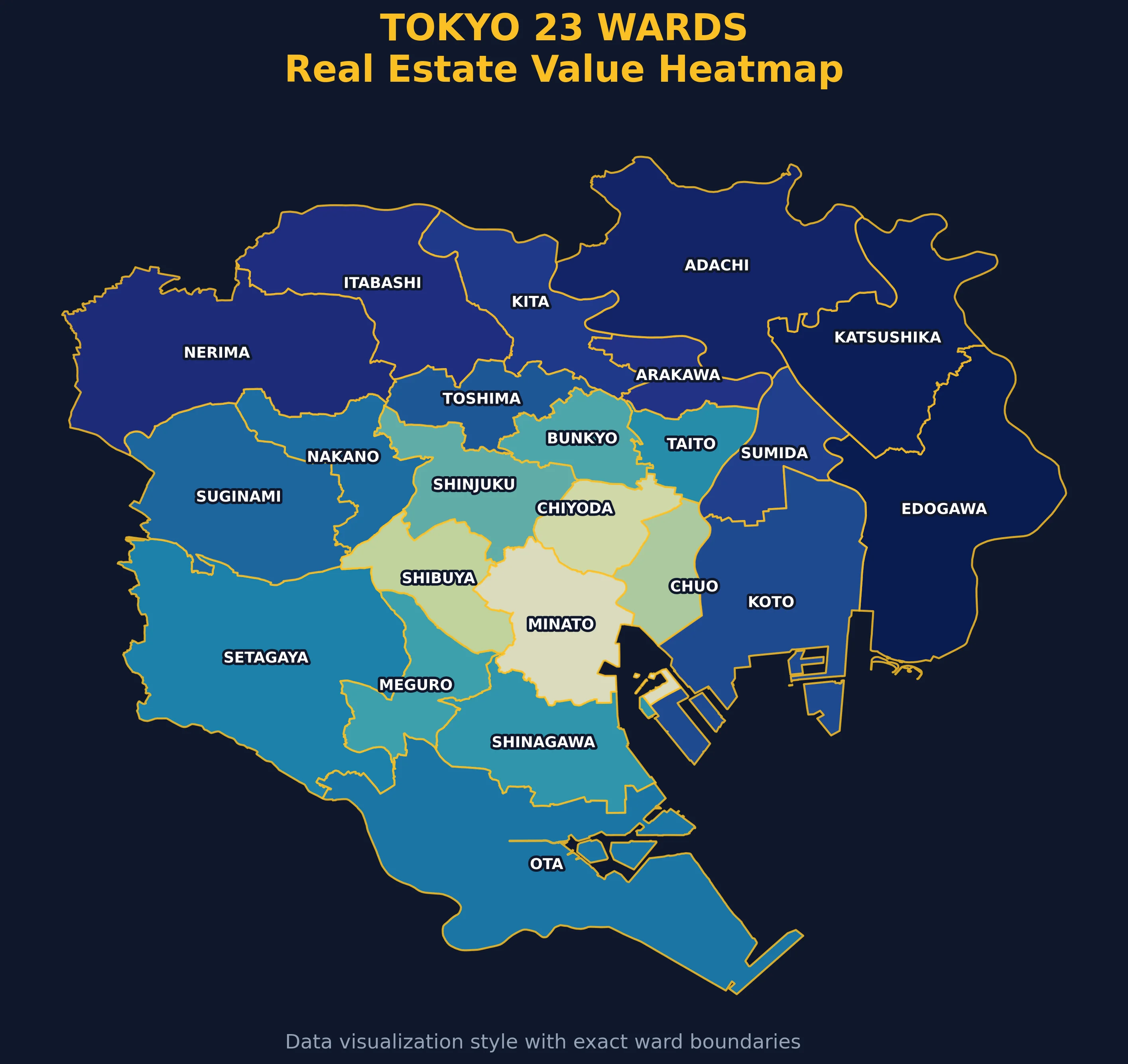
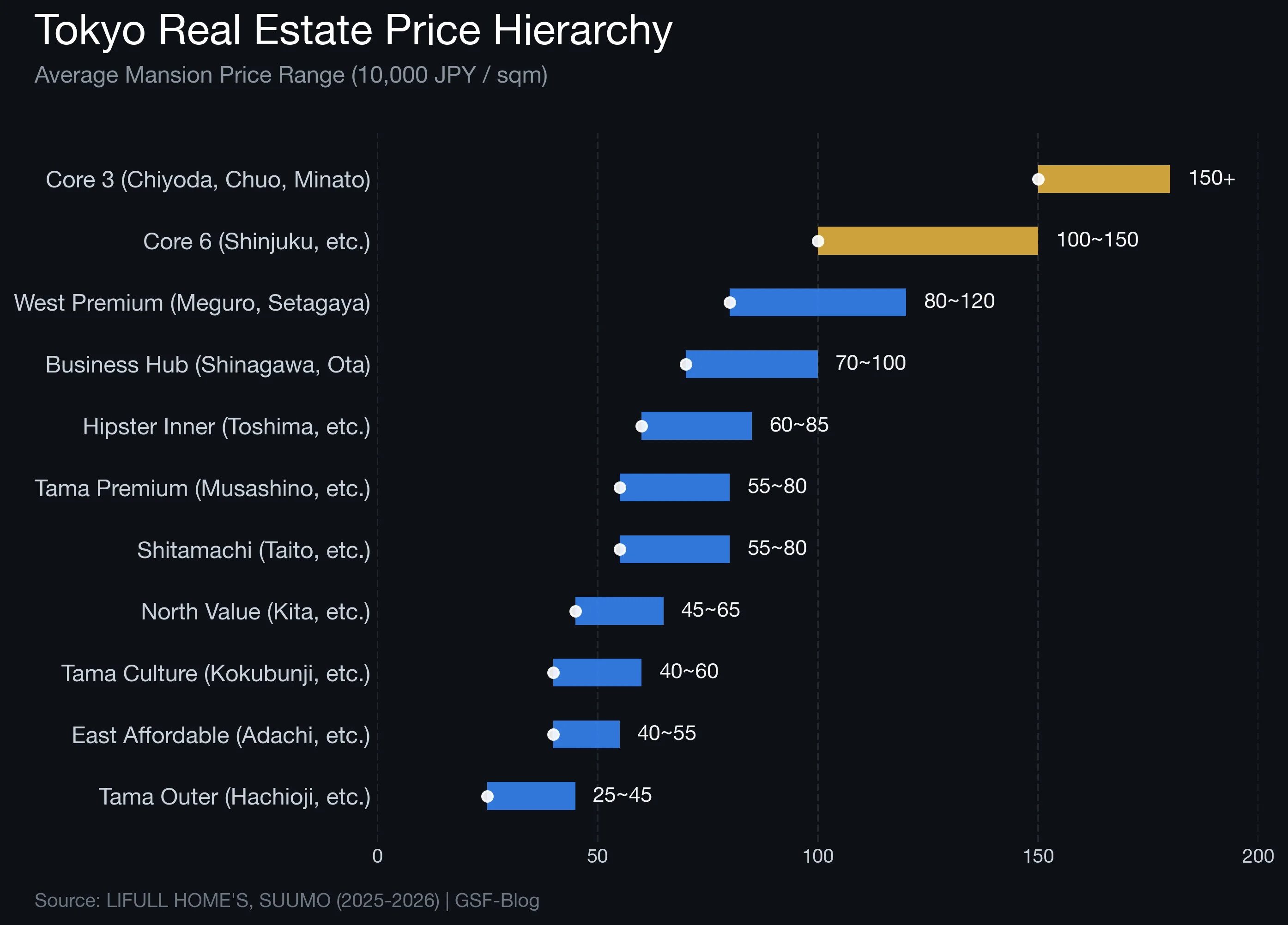
The infographic and table below map each ward cluster’s rough positioning. The heatmap visually highlights the stark price divide between the central Core 6 and outer zones. Detailed data appears in each dedicated episode.
| Tier | Wards | Price Range (per ㎡) | Character |
|---|---|---|---|
| Core 3 | Chiyoda · Chuo · Minato | 1.5 million JPY (¥1.5M)+ | Max premium, top foreign investor preference |
| Core 6 (next 3) | Shinjuku · Shibuya · Bunkyo | 1.0–1.5 million JPY (¥1.0M–¥1.5M) | Commerce, trend, academia — young professionals |
| West Premium | Meguro · Setagaya | 800,000–1.2 million JPY (¥800K–¥1.2M) | Family-grade luxury living, spacious housing |
| Business Hub | Shinagawa · Ota | 700,000–1.0 million JPY (¥700K–¥1.0M) | Shinkansen/Haneda direct, corporate demand |
| Hipster Inner | Toshima · Nakano · Suginami | 600,000–850,000 JPY (¥600K–¥850K) | Trendy, Korean community, relative value |
| Shitamachi | Taito · Sumida · Koto | 550,000–800,000 JPY (¥550K–¥800K) | Traditional + redevelopment, emerging investment |
| North Value | Kita · Arakawa · Itabashi · Nerima | 450,000–650,000 JPY (¥450K–¥650K) | Korean enclave, practical, ongoing redevelopment |
| East Affordable | Adachi · Katsushika · Edogawa | 400,000–550,000 JPY (¥400K–¥550K) | Spacious, lowest prices, long-term upside |
| Tama Premium | Musashino · Mitaka · Chofu | 550,000–800,000 JPY (¥550K–¥800K) | Kichijoji brand, solid commute access |
| Tama Culture | Kokubunji · Kunitachi · Fuchu · Tachikawa | 400,000–600,000 JPY (¥400K–¥600K) | University town, Tachikawa redevelopment |
| Tama Outer | Hachioji · Machida · Tama, etc. | 250,000–450,000 JPY (¥250K–¥450K) | Wide lots, 30–50% below central Tokyo |
Note: Figures above are approximate 2025–2026 ranges. Variance by station proximity, building age, floor, and unit size is significant. Each episode provides more precise data.3
Can Foreigners Buy Real Estate in Tokyo?
It’s often the first question I hear. The short answer: Japan places no legal restrictions on foreign ownership of real estate. Anyone, regardless of nationality, can purchase a mansion (condominium) or land — including non-residents.
The practical hurdles are a different matter. Mortgages are difficult to secure without a Japanese address and verifiable local income. Management association procedures and paperwork are often Japanese-only. I cover the foreign buyer environment specifically in the final section of each episode.
Data Sources Used in This Series
Accuracy matters here. I’m transparent about where the numbers come from.
- Purchase and rental prices: LIFULL HOME’S and SUUMO aggregated transaction and listing data
- Population and foreign resident ratios: Tokyo Metropolitan Government Statistics Portal (basic resident registry by ward)
- Household income: National Tax Agency Private Sector Wage Survey, supplemented by ward-level public data
- Data reference date: Stated in each episode. Real estate prices fluctuate quarterly — always check the linked sources for the latest figures.
▶ Ep.1 — Core 3 Wards: The Heart of Tokyo
Tokyo Core 3 Wards: Chiyoda, Chuo & Minato — Relocation & Investment Data Guide — Published
The ward where the Imperial Palace sits. The ward that contains Ginza and Nihonbashi. The ward of Roppongi and Azabu. These three wards are Tokyo’s most expensive, most iconic, and most in-demand among foreign investors. Why per-tsubo prices here are two to three times those of other wards, what the variance looks like within each ward by station, and how to think about long-term hold versus yield play — all covered.
▶ Ep.2 — Core 6 Wards: The Face of Tokyo
Tokyo Core 6 Wards: Shinjuku, Shibuya & Bunkyo — Published
Japan’s busiest transfer hub in Shinjuku, the center of trends and consumer culture in Shibuya, and the university district of Bunkyo. The second tier of Tokyo’s premium wards, each with a completely different character.
▶ Ep.3 — West Premium Residential Belt
Tokyo West Premium Residential Belt: Meguro & Setagaya — Published
Jiyugaoka and Nakameguro in Meguro, and the spacious single-family neighborhoods of Setagaya. The two wards that best satisfy the desire for a quality residential life in Tokyo.
▶ Ep.4 — Business Gateway
Tokyo Business Gateway: Shinagawa & Ota — Published
Shinagawa as the Shinkansen departure point, and Ota with Haneda Airport. A practical data guide for investors and relocators who prioritize business accessibility above all.
▶ Ep.5 — Hipster Inner Ring
Tokyo Hipster Inner Ring: Toshima, Nakano & Suginami — Published
The Ikebukuro redevelopment momentum of Toshima, the hidden-gem appeal of Nakano, and the family-first stability of Suginami. A data-driven breakdown of the wards where value and cultural density are most in balance.
▶ Ep.6 — Shitamachi Renaissance
Shitamachi Renaissance: Taito, Sumida & Koto — Published
Asakusa and Ueno in Taito, the Sumida River corridor, and Toyosu–Ariake in Koto. Price, rent, and foreign-resident livability where tradition meets redevelopment.
▶ Ep.7 — North Tokyo Value Belt
North Tokyo Value Belt: Kita, Arakawa, Itabashi & Nerima — Published
Four northern wards where practical housing and ongoing redevelopment meet. Data for relocators and investors who prioritize space and access per yen.
▶ Ep.8 — East Side Story
East Side Story: Adachi, Katsushika & Edogawa — Published
The eastern value belt of the 23 wards. Larger floor plates, lower entry prices, and long-horizon upside — compared across the three wards.
▶ Ep.9 — Tama Premium Cluster
Tama Premium Cluster: Musashino, Mitaka & Chofu — Published
Kichijoji brand power with workable CBD commutes. Housing, schools, and price positioning across the Tama premium trio.
▶ Ep.10 — Tama Education & Culture Belt
Tama Education & Culture Belt: Kokubunji, Kunitachi, Fuchu & Tachikawa — Published
University towns and Tachikawa redevelopment in one belt — including how prices per ㎡ diverge sharply by neighborhood within the same city.
▶ Ep.11 — Western Tama — The Average Trap
The Real Housing Prices of Western Tama Hidden Behind Averages: Hachioji, Hino, and Akishima — Published
City averages hide a dual structure of station-area premiums and outer neighborhoods — examined through Hachioji, Hino, and Akishima.
▶ Ep.12 — Southern New Town Belt
Has Tama New Town Really Failed? Machida, Tama City & Inagi — Published
We test the uniform failure narrative against neighborhood-level transaction prices — hub premiums and dual location structures.
▶ Ep.13 — 23-Ward Edge Commute Belt
Is Nishitokyo Priced Like the 23 Wards? — Kodaira & Koganei Transaction Prices — Published
Adjacency versus the rail line (Chuo direct vs Seibu transfers): Nishitokyo, Kodaira, and Koganei compared at neighborhood level.

![Where Are Setagaya's Affluent Areas? — Seijo & Meguro Property Prices [Ep.3·2026]](https://gsfark.com/assets/images/blog/tokyo-meguro-setagaya-hero-og.jpg)