※ This article is for informational purposes only and is not investment, legal, tax, or immigration advice. Figures, rules, hours, and operational details were accurate when published—verify with official sources before you rely on them.
Since I started living in Nihonbashi Hamacho, one thing has consistently surprised me: how rich the neighborhood amenities are for a place smack in the middle of downtown Tokyo. The address alone conjures images of towering office buildings and a sea of convenience stores — hardly the setting you’d associate with proper grocery shopping, parks, or a leisurely evening walk. Honestly, I had those same assumptions before we moved. There was an unspoken worry that while the location would be convenient for work, everyday life might feel slightly sterile or impractical. Living here has dismantled that notion, piece by piece.
My Wife’s Biggest Concern
Before we decided to move to Nihonbashi, my wife’s number-one worry was grocery shopping. When we scouted the area, convenience stores were everywhere between the buildings, but a proper supermarket — one where you could actually pick out fresh vegetables or choose the day’s fish — seemed nowhere to be found. The fear wasn’t irrational: if we had to survive on convenience store staples, no amount of locational prestige would compensate for the quality-of-life hit.
Once we actually settled in and started exploring the neighborhood with fresh eyes, though, we discovered small but well-stocked marts tucked away in various corners. Drugstores, too, were surprisingly plentiful. The assumption that downtown living meant inconvenient grocery runs turned out to be just that — an assumption. The amenities were there all along; we just hadn’t looked carefully enough.
Hamacho’s Hidden Gem: Peacock Supermarket
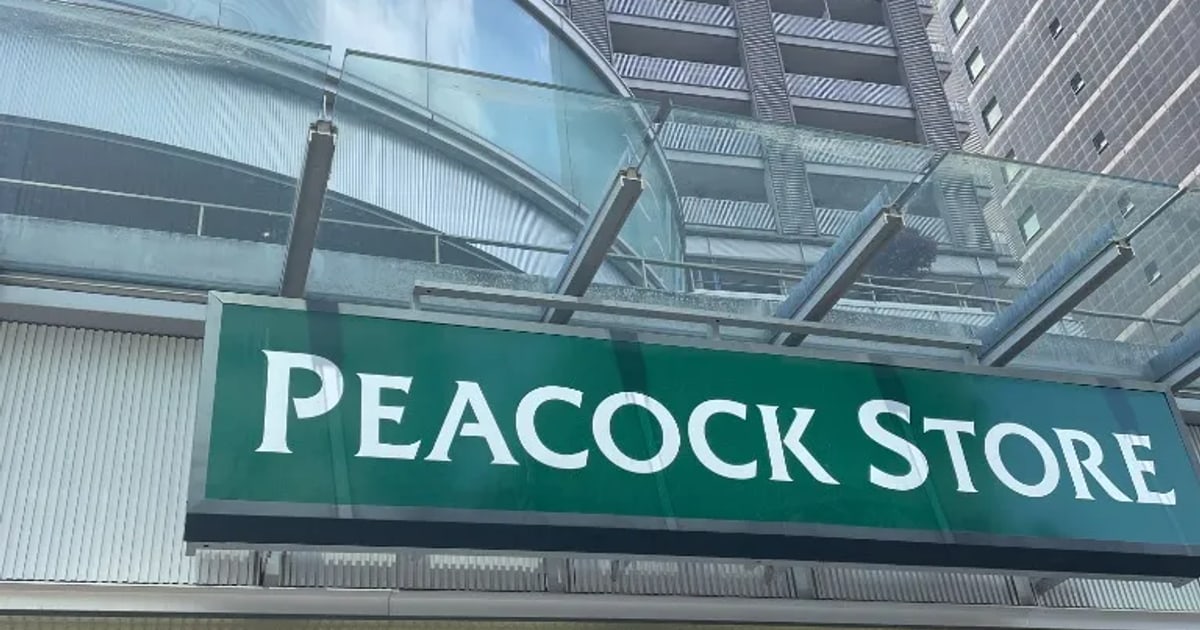
The real game-changer sits on the ground floor of Tornare, the landmark tower residence of Hamacho. There you’ll find Peacock Store, a full-scale supermarket that operates 24 hours a day — already a significant advantage for anyone with an irregular schedule.1 No more frantic dashes before closing time, no more realizing at 11 PM that you’ve run out of something essential.
But it’s not just about size or hours. The vegetables and seafood are remarkably fresh, and the prices are astonishingly reasonable. I still remember the double-take I did on my first visit — first at how vibrant and abundant the produce looked, then again when I checked the price tags. The combination felt almost impossible for central Tokyo. It’s the kind of freshness you’d expect at a local market, presented inside a modern, well-organized supermarket. For my wife and me, stumbling onto Peacock felt like discovering a small but meaningful gift tucked into the neighborhood.
The Secret Behind the Freshness: Central Wholesale Market
There’s a logical explanation for these surprisingly fair prices, and it took me a while to piece it together.
In nearby Koto Ward, just across from Chuo Ward where we live, sits the Central Wholesale Market (中央卸売市場) — the largest wholesale market in Tokyo, handling massive volumes of seafood and produce.2 Hamacho’s position in Chuo Ward puts it almost directly adjacent to this distribution hub.3 The shorter the distance from wholesale to shelf, the fresher the product — and the lower the logistics cost that would otherwise get passed on to the consumer.
What started as idle curiosity about my local supermarket gradually expanded into a broader understanding of how Tokyo’s food supply chain actually works. From the Peacock store in Hamacho to the Central Wholesale Market in Koto Ward — a single neighborhood observation opened up a much larger picture. I find that kind of local discovery genuinely satisfying.
Parks, Sports Center, and Night Walks: More Green Space Than You’d Expect
Once the grocery question was settled, I started noticing the fitness options. Hamacho has Hamacho Park (浜町公園) — and inside, there’s a full sports center offering swimming pools, a gym, and group fitness classes. For anyone who assumed that downtown Tokyo living meant paying a premium to travel to the nearest decent gym, this comes as a real surprise. Everything I expected to require a commute turned out to be a short walk from the front door.
And it doesn’t stop at Hamacho Park. Smaller parks are dotted throughout the neighborhood as well. What I find particularly appealing is that many of them are lit up at night. The atmosphere after dark is entirely different from the daytime — quieter, more intimate, with warm lighting along the paths that makes the whole thing feel almost curated. My wife and I have made a habit of taking evening strolls on good-weather nights, and there’s something almost disorienting about how peaceful it feels, given that we’re technically in the heart of Tokyo. The illuminated greenery creates a soft, unhurried backdrop that’s become one of my favorite parts of living here.
The lit paths also feel safe, which matters when you’re heading out after dinner. Traffic in the residential pockets of Hamacho quiets down considerably in the evenings, and the neighborhood takes on a completely different character. The daytime bustle gives way to something genuinely calm — serene in the way you’d hope for in a well-designed residential area, regardless of where it sits on the map.
The Unexpected Rewards of City Center Living
Urban living certainly comes with both advantages and trade-offs. I suspect some of you may share the same kind of preconceptions my wife and I had before making the move — expensive daily costs, limited greenery, constant noise. These are fair concerns, and I won’t pretend none of them exist.
But I’d encourage anyone considering it to remember: even in the heart of the city, daily amenities can be surprisingly abundant. The supermarket, the park, the sports center — they were all closer than we imagined. And the comfort that comes from shortening the physical distance between your workplace and your home is something that’s difficult to fully appreciate until you experience it. Those reclaimed commute hours don’t disappear; they redistribute into quiet mornings, unhurried dinners, and exactly the kind of evening walks I mentioned above. The greatest benefit of all is probably time itself.
Everyone’s lifestyle is different, and every choice deserves respect. A preference for a larger home surrounded by nature is entirely valid, and I understand the appeal completely. There’s no single right answer. But for those who harbor vague reservations about downtown living, I’d simply like to point out that there are genuine advantages that come precisely because it is the city center. Life in Hamacho has confirmed that for us, quietly and consistently, every single day.

![Japan Rental Contracts: Ordinary vs Fixed-Term Leases & Restoration [2026]](https://gsfark.com/assets/images/blog/tokyo-moving-contracts-two-notes-hero-og.jpg)
![Is Shin-Okubo Tokyo's Only Koreatown? Cultural, Support & Business Hubs [2026]](https://gsfark.com/assets/images/blog/tokyo-korean-community-beyond-shinokubo-hero-og.jpg)