※ This article is for informational purposes only and is not investment, legal, tax, or immigration advice. Figures, rules, hours, and operational details were accurate when published—verify with official sources before you rely on them.
People who read the data-heavy posts on this site sometimes ask me a simpler question.
Not about price per tsubo or vacancy rates.
Not about redevelopment timelines or MLIT transaction records.
They ask: Why Nihonbashi?
It is a fair question, and a more revealing one than it first appears.
Because the answer is not only about one neighborhood. It is also about how I think a place should be judged in the first place.
Tokyo offers many plausible choices.
If you are looking only at fundamentals, there are arguments for Shinjuku, for Shibuya, and for parts of Minato that still offer relative value despite their reputation. Even within Chuo Ward, there are easier places to explain on paper than Nihonbashi.
So the question deserves a serious answer.
The Spreadsheet Answer
I will start with the numbers, because the numbers are real and they matter.
Nihonbashi sits within Chuo Ward — one of Tokyo’s three innermost wards alongside Chiyoda and Minato.
The area has been under sustained redevelopment pressure for years. Mitsui Fudosan’s long-term plan to remove the elevated expressway above the Nihonbashi River and restore the historic skyline has kept the district under consistent institutional attention. New commercial towers, new hotels, and mixed-use projects have followed. Transportation access remains among the best in the city, with multiple subway lines and Tokyo Station within easy reach. For a buyer thinking in terms of long-term location quality, these are not small advantages.
The spreadsheet said yes.
But I do not mean that I wandered into the neighborhood and later invented a story around it.
Before buying, I spent close to two years watching Tokyo’s market. I tracked transaction records, compared listings across central wards, and slowly narrowed my search. I looked at places that were newer, places that were cheaper, and places that might have made a cleaner investment case if all I wanted was a neat explanation on paper.
Nihonbashi was one of the few places where the numbers held up — and where the reasons beyond the numbers did too.
Macro barrier: high. Supply constraint: real. Institutional interest: sustained.
The spreadsheet gave me permission to keep looking seriously.
It did not make the decision by itself.
What the Spreadsheet Does Not Capture
I chose Nihonbashi because my wife grew up here.
When my wife and I moved to Tokyo in 2018, this was the part of the city she knew best — the streets she had walked as a child, the bridge she had crossed in every season, the district that held the texture of her earliest memories.
Living near Nihonbashi was not, at first, an investment thesis.
It was a way of staying close to something that mattered to her.
No transaction database can record a reason like that. But reasons like that are often the ones that decide where a life is actually built.
That mattered to me more than I was willing to admit at the time.
The Bridge
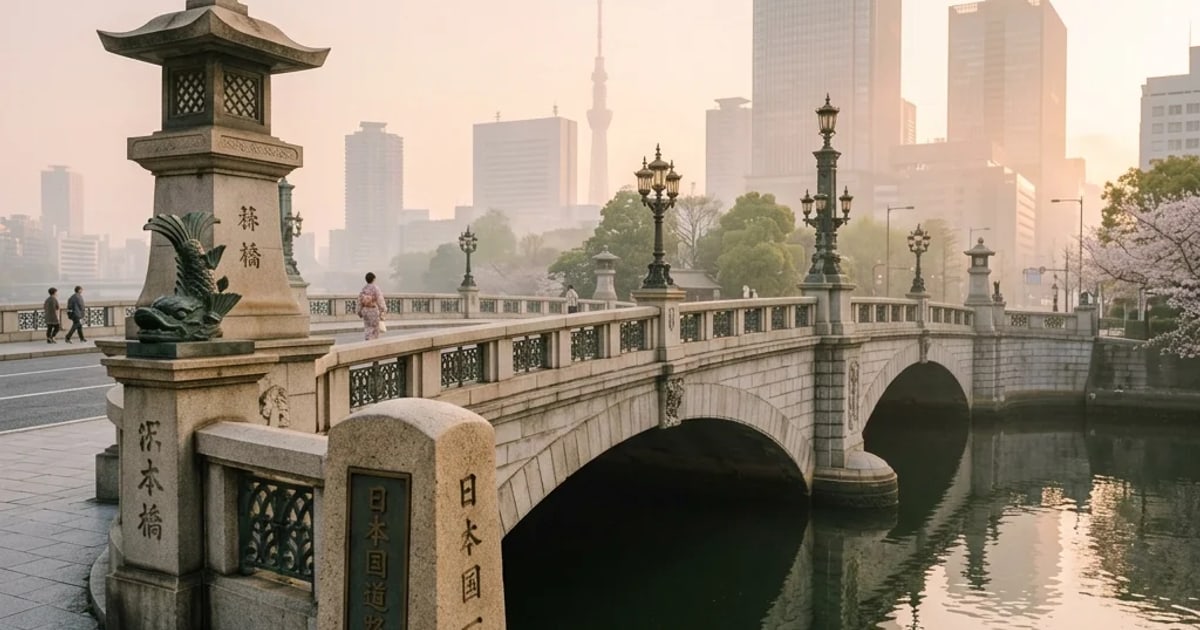
The Nihonbashi bridge itself is not an overwhelming landmark.
Compared to the more photogenic parts of Tokyo, it can seem almost restrained: a stone bridge, bronze ornaments, traffic moving past, and the plaque marking the kilometre-zero point from which road distances in Japan are officially measured.
But the place carries a different kind of weight.
I have written separately about the history that made Nihonbashi Japan’s starting point.
Years before my wife and I bought my home, I remember standing there and thinking about what it meant to be at the starting point.
Not the destination.
The starting point.
From this bridge, every road in Japan officially begins.
It would be easy to call that sentiment and leave it there.
But where people choose to live is rarely decided by numbers alone. In the end, most homes are chosen at the point where practical judgment and private meaning meet. Nihonbashi became that place for my wife and me.
Years later, my wife and I bought an address that contains the word Nihonbashi.
I still do not think that was an accident.
The Neighborhood Itself
There is a quality to Nihonbashi that I find difficult to reduce to a sales pitch.
It is not the energy of Shibuya. It is not the spectacle of Shinjuku. It does not try to impress you in the way newer parts of Tokyo sometimes do.
What it offers instead is a rare kind of balance.
At its center, Nihonbashi is unmistakably commercial: financial institutions, department stores, headquarters of old pharmaceutical firms, office towers, and the dense weekday rhythms of central Tokyo business life.
But if you live nearby, you begin to notice how quickly the district changes at the edges.
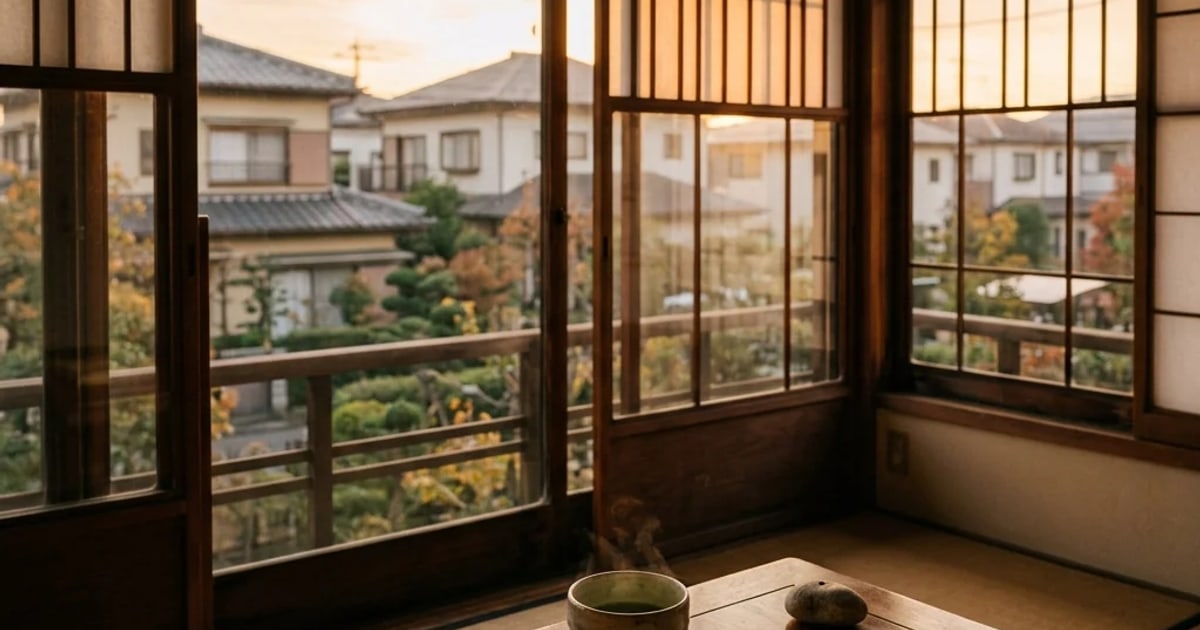
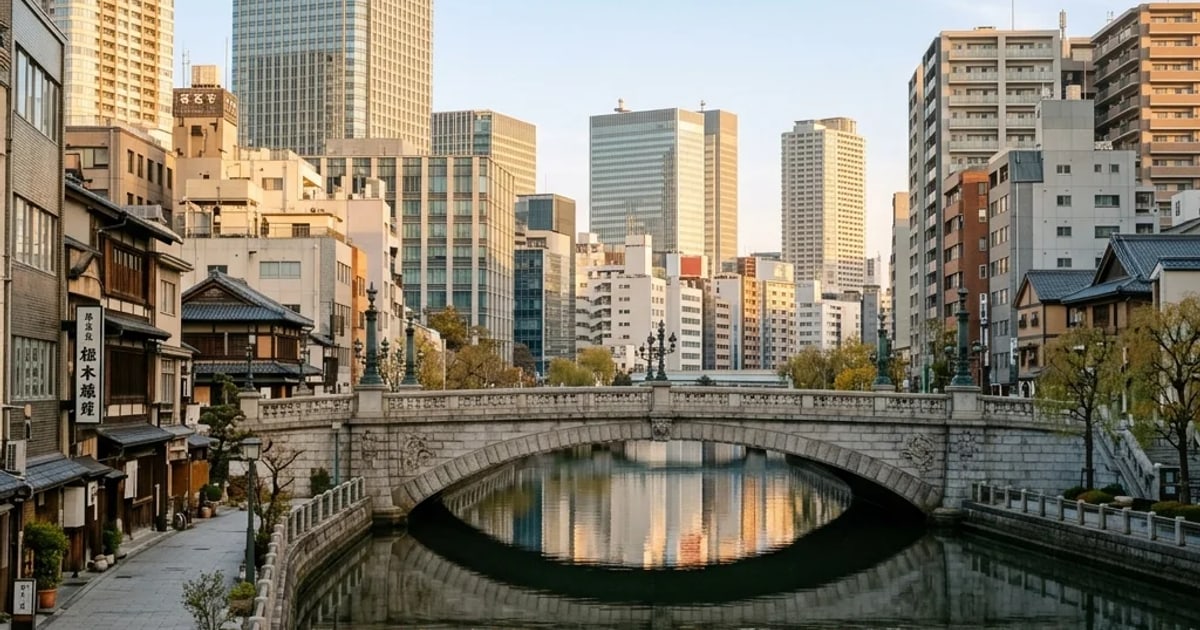
Five or ten minutes in one direction, and the streets belong to office workers, delivery trucks, and people moving with purpose toward station entrances. Walk a little further, and the atmosphere softens. Small supermarkets, local clinics, dry-cleaning shops, old cafés opening for breakfast, apartment buildings tucked behind commercial facades — the district begins to feel less like a business center and more like a place where ordinary routines are quietly sustained.
That is the version of Nihonbashi I know best.
In the early morning, before the office towers fully wake up, the neighborhood feels almost borrowed back from the business day. Delivery trucks idle behind department stores. Shop staff prepare to open shutters. Residents stop by the supermarket before work. If I walk toward the river early enough, the streets are still in transition — not yet crowded, not fully private, but somewhere in between.
The Nihonbashi River itself is not grand. The water is narrow, the bridges old, the expressway still casting its shadow overhead.
And yet I return to it often.
The appeal is not spectacle. It is steadiness.
Nihonbashi does not announce itself dramatically. It reveals itself through repetition — through the routes you walk often enough that they stop feeling like routes and begin feeling like part of your life.
What the Choice Taught Me
Buying in Nihonbashi clarified something I now carry into every property decision.
The places that hold value over time are often the places people genuinely want to build their lives around.
Redevelopment matters. Infrastructure matters. Supply constraints matter. All of those belong in a serious investment framework, and I use them myself.
But none of them fully compensates for a neighborhood people do not actually want to return to.
Nihonbashi has remained commercially and symbolically important since the Edo period. That continuity is not an accident. It suggests that the location has served generations of residents, workers, merchants, and institutions well enough to remain central long after the original reasons for its prominence might have faded.
When I evaluate a neighborhood now, I still look at the data first. I still care about transaction records, access, supply, and long-term demand.
But I also ask a quieter question.
Is this a place people truly want to be?
Not because a brochure says so. Not because a developer’s rendering says so. But because, if you spend enough time there and pay attention, you can tell whether people are merely passing through it or actually building their lives around it.
That distinction matters more than many investors admit.
The research I publish on this site is an attempt to make the invisible visible.
Transaction prices. Vacancy trends. Redevelopment pipelines. Ward-by-ward supply data — the kind of analysis I covered in the Tokyo property surprises series.
All of that matters.
But it is still a map, not the territory.
The territory is the place itself — the neighborhood as it is actually lived in, not simply measured.
I spent years watching Tokyo’s market before buying in it. I still live with the consequences of that decision every day: in the monthly costs, the station walks, the changing skyline, the routines of the neighborhood, and the long view of what makes one part of Tokyo retain its value while another gradually loses its hold.
That is the perspective I bring to this work.
Not only that of an analyst reading transaction data, but of a homeowner who chose one address, paid for it, and continues to test his convictions against the place itself.
Logged from Nihonbashi, Tokyo.

![Buying a Condo in Japan: 10 Things to Check Before You Sign [2026]](https://gsfark.com/assets/images/blog/buying-property-japan-checklist-before-you-commit-hero-og.jpg)