※ This article is for informational purposes only and is not investment, legal, tax, or immigration advice. Figures, rules, hours, and operational details were accurate when published—verify with official sources before you rely on them.
I have been investing in real estate since 2013.
Before moving to Japan, I had spent more than a decade investing in Korean real estate, including redevelopment districts, residential properties, and court-auction purchases.
But buying a condominium in Tokyo as a foreign investor was different in ways I did not expect.
This is not a technical guide.
It is a record of what actually surprised me — someone who thought he already understood property markets.
The Search: Why Nihonbashi
When I began searching for a property in central Tokyo, I quickly learned the first uncomfortable truth: the six core wards — Chiyoda, Chuo, Minato, Shinjuku, Shibuya, and Bunkyo — are priced at a level that simply removes most foreign buyers from consideration without a second thought.
I nearly gave up on the idea of central Tokyo entirely.
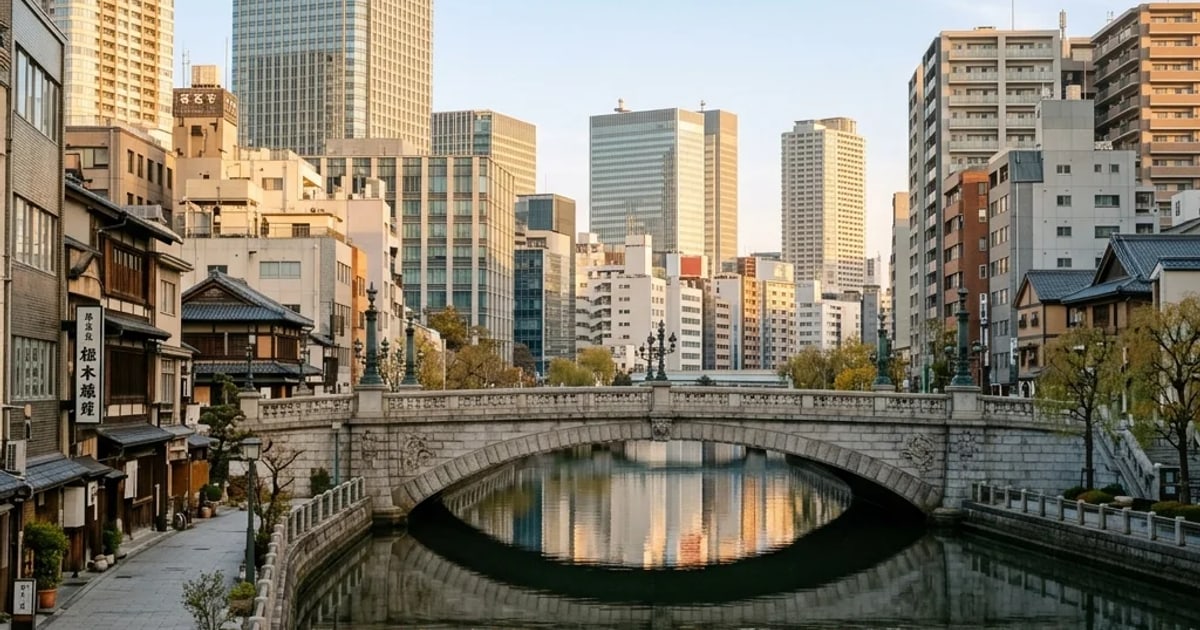
But I kept returning to one neighborhood: Nihonbashi.
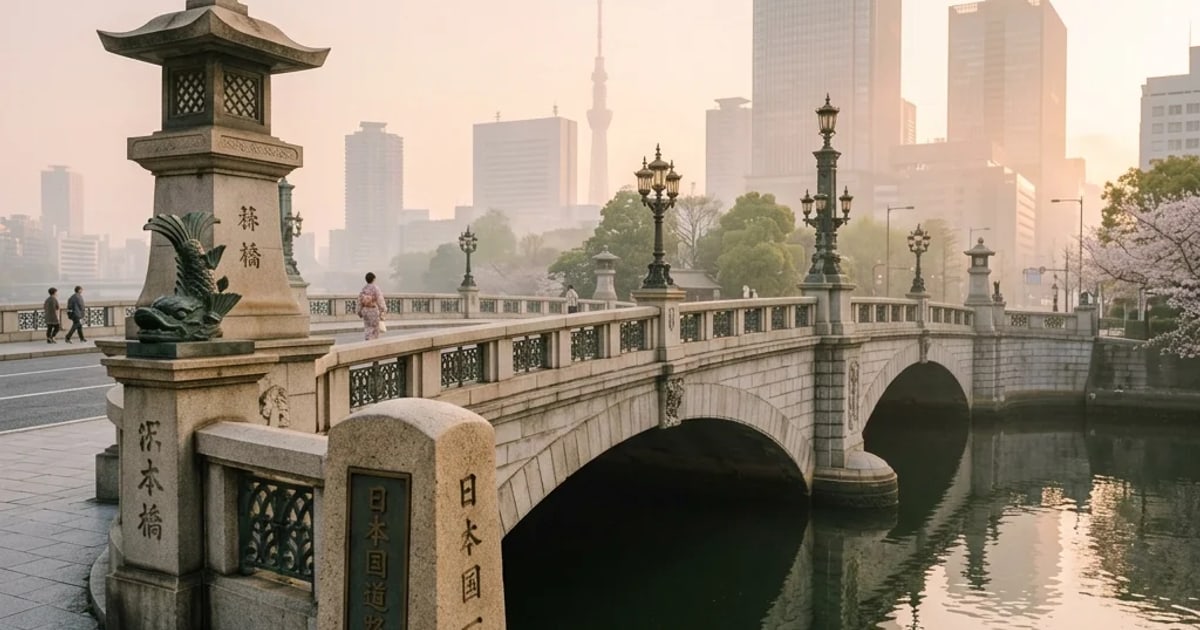
Nihonbashi is where Japan’s Kilometre Zero marker stands — the single point from which every road distance in the country is measured. It is the geographic and symbolic starting point of Japan.
My wife grew up in this area. I had walked its streets, crossed its bridge, and understood its rhythm in a way that spreadsheets cannot capture.
Nihonbashi mattered to me for another reason.
It is the point from which every road in Japan is measured.
When I first stood on the bridge years ago, I found myself wondering what it would mean to build a life near the place where so many journeys begin.
At the time, it was simply a thought.
Years later, it became an address.
So I kept searching. Not broadly — specifically.
I wanted an address that actually contained the word Nihonbashi.
That constraint narrowed the field considerably, but I did not lower it.
The Procedure: Where Japan and Korea Diverge
In Korea, when you find a property you want, the sequence is straightforward: you express interest, you transfer a deposit, and you hold the unit.
Speed and money signal seriousness.
Japan does not work this way.
The first formal step in a Japanese property purchase is submitting a 購入申込書 — a written letter of intent to purchase.
No money changes hands at this stage.
You are expressing your intention in writing, through your agent, and the seller reviews it.
This stopped me.
In Korea, the question is:
Do you have the money?
In Japan, the first question is:
Are you a serious buyer who understands what you are committing to?
The distinction sounds minor.
In practice, it changes everything about how you approach the decision.
The Moment: Timing Is Not a Cliché
I found a unit that matched everything I had been looking for.
An older building — but exceptionally well maintained.
Nihonbashi address — confirmed.
Location — as central as we could reasonably hope for.
I decided quickly.
My agent submitted the letter of intent without delay.
What I learned afterward was that another buyer had appeared, willing to pay more.
They were too late.
My letter was already in.
I have thought about this moment many times since.
Had I hesitated for a day, the outcome would have been different.
Had my agent been slow with the paperwork, the outcome would have been different.
In a market where the best units move without announcement, the difference between acquiring and missing a property is often measured in hours — not price.
The Reality: What a Good Process Actually Does
What impressed me most was not a particular agent, but the Japanese transaction process itself.
The process assumes that buyers, sellers, and agents each understand their responsibilities and move in coordination.
That coordination matters.
Language was a part of the experience.
My wife is Japanese, which helped smooth many interactions.
But the larger issue was procedural knowledge.
My agent understood exactly when to move, how to frame the letter of intent, how to communicate with the seller’s representative, and how to keep the process moving without errors.
In Korea, the role of the agent is real but often secondary.
Money tends to drive the transaction.
In Japan, the procedure itself is load-bearing.
The documentation, the timing, and the communication all matter.
Getting any one of them wrong can jeopardize a deal that otherwise should have closed.
For a foreign buyer operating without a Japanese spouse, without a trusted agent, and without familiarity with these procedures, I would not call it impossible.
But I would call it genuinely difficult.
What I Took Away
Three things I did not fully understand before this purchase:
1. Price is necessary but not sufficient.
In Japan’s condominium market, a higher offer does not automatically win.
The letter-of-intent system means the seller is evaluating the buyer’s seriousness and reliability — not just the number.
2. The best properties do not wait.
The unit we purchased was not listed for long.
Well-located and well-maintained properties in central Tokyo are absorbed quickly and quietly.
Serious buyers are already watching.
They do not need an announcement.
3. Local knowledge is not optional.
The Tokyo property market is remarkably well documented.
Data is publicly available.
Transaction prices are recorded.
Government sources are accessible.
But knowing how to interpret that data, how to act on it, and how to navigate a transaction without errors requires either years of experience or a trusted partner who has them.
By the time I completed the purchase, I had spent nearly two years watching listings, studying transaction data, and narrowing the search.
I purchased this condominium in 2026.
I still live at the same address today.
The research I publish on this site — the ward-by-ward data, the price trends, and the MLIT datasets — is not abstract to me.
It is the foundation I wished I had when I was still searching, walking through neighborhoods, comparing listings, and wondering whether I would ever find the right place in Nihonbashi.
Now I write from the place where that journey began, not where it ended.
Logged from Nihonbashi, Tokyo.

![Buying a Condo in Japan: 10 Things to Check Before You Sign [2026]](https://gsfark.com/assets/images/blog/buying-property-japan-checklist-before-you-commit-hero-og.jpg)